.svg)
Amazon PPC
End-to-End Management
Removal Order Recovery
You're losing real money on every customer return. Most brands never find out how much.
.svg)
.svg)
Is Walmart worth it for your Brand?
Find Out in Just 30 Days
Why Walmart Feels Like a Gamble:

Low Listing Quality Scores (LQS) make ads ineffective
Lack of clarity on product fit and scaling costs - no clear reporting
Limited sales and visibility without effective optimization
Why You're Absorbing 100% of the Loss

Need Heading
Amazon's inspection process is fast, surface-level, and inconsistent. A meaningful portion of your "unsellable" returns are actually disputable. We build the process to find them and recover them — without changing your current team.
Need Heading
Most brands take one of three paths when inventory comes back from Amazon. All three have the same thing in common: the disputable units never get disputed.
Liquidate or Dispose
Fast and simple. You move on. But you absorb 100% of the COGS loss, plus disposal fees, on units that may have been recoverable.

Accept Amazon's Classification
Low effort. You trust the call. But Amazon's inspections are surface-level and inconsistent — disputable value gets left on the table every time.
DIY Without Disputes
Inventory comes back to your warehouse. You have the units. But without a claim process, there's still no systematic recovery of what Amazon owes you.
A recovery system that sits on top of what you already have.
This doesn't replace your 3PL, your agency, or your ops team. It's a repeatable operational layer that takes removal orders from Amazon's classification — all the way through to a submitted dispute.
What you get in 30 days
Unit-Level Inspection
Every removal order unit gets inspected individually and categorized — sellable, damaged, incomplete, Amazon's fault, not Amazon's fault. Not at the shipment level. At the unit level.
Standardized Evidence Capture
Each disputable unit gets documented using a standardized evidence format. Photos, condition notes, Removal Order ID matching. Everything a reimbursement partner needs to actually submit a claim.
Claim Submission via Partner Network
Eligible units get passed to our reimbursement claim partners. They submit. You get notified. Nothing happens without you having full visibility.
Claim Submission via Partner Network
4. After categorization you decide — dispose, return to warehouse, or repackage and send back to FBA. You're making the call with data, not before you have it.
The gap isn't tracking — you probably have some version of that. The gap is turning inspection data into reimbursable claims, at scale, every time. That's what we build.
What You Get
What you walk away with after 60 days.
Working Recovery Process
Walmart values sellers with a history of success in the marketplace or eCommerce space. A credible track record helps build trust with Walmart’s customers.
Unit-Level Classification Data
Carefully review Walmart’s Prohibited Products Policy to ensure your catalog is compliant. Products that violate this policy will lead to immediate rejection of your application.
Real Reimbursements
Provide all requested details in your application to avoid delays. The more thorough you are upfront, the quicker the approval process will be.
ROI Visibility
Familiarize yourself with Walmart’s Performance Standards and Policies to ensure you remain compliant throughout your selling experience.
Operational pricing.
No surprises.
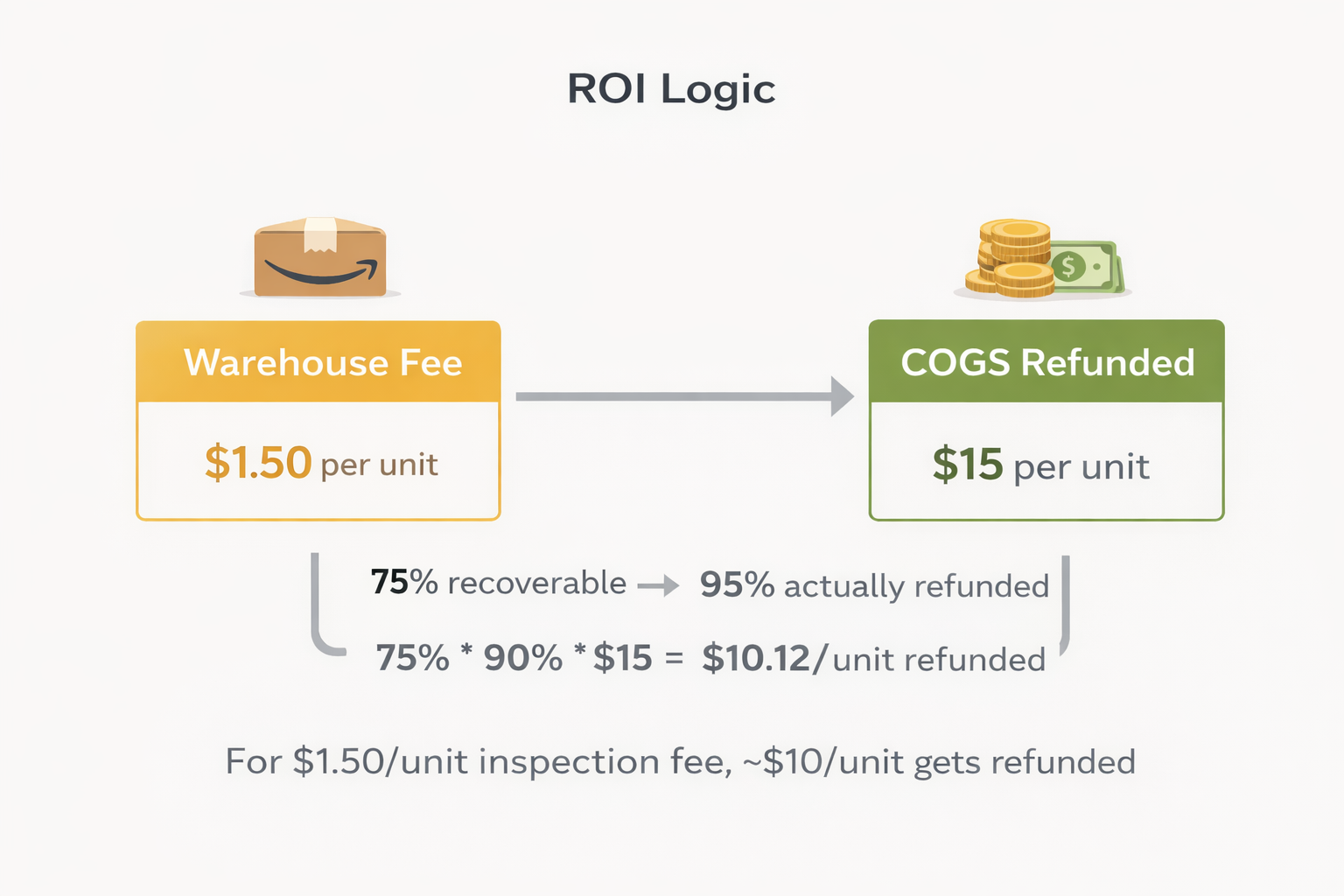
Pricing is product-dependent and based on what it actually costs to inspect and process your inventory — not a percentage of your revenue.
On-going
Per unit inspected
$1.50–$5.00
Depends on product complexity. Covers unit-level inspection and standardized evidence capture. This is your core operating cost.

On recovery only
Reimbursement partner fee
25%
Charged only on successful reimbursements. No recovery means no fee. Pilot period commission is fully waived.
NO FRICTION !
This doesn't require changing anything you're already doing.
.svg)
No agency switch.
Your current agency keeps doing what they do. This is a data and operations layer, not a marketing play.
No outcome guarantees
Just real visibility. The pilot is designed to measure recoverable value, not promise a number before we've seen your inventory.
Setup in days, not weeks.
Configuration covers a scoped, fast onboarding. We're applying a proven system to your catalog — not building from scratch.
.svg)
.svg)